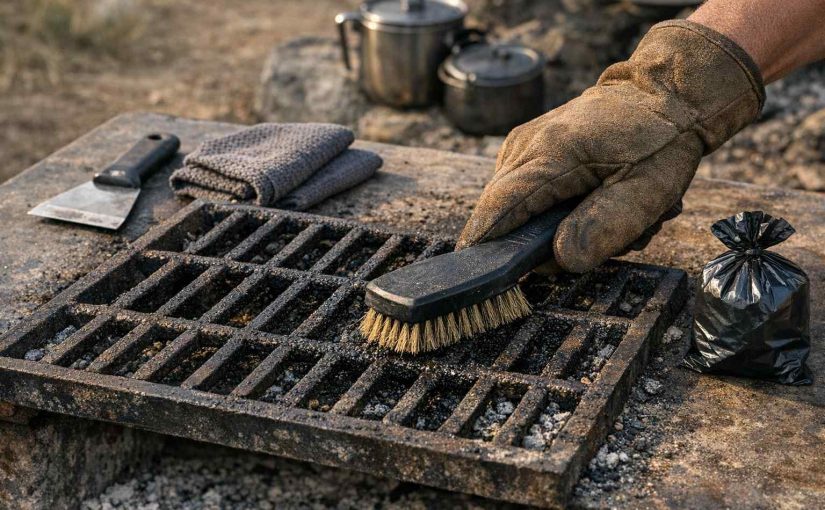
That grate which was so easy to pop beside the campfire looks a rather nasty piece of work when returned to camp and subsequently to be stored in a damp camp site storage area. More importantly it needs to be cleaned to protect your cooking equipment and prevent old residue from smoke developing on subsequent uses of your portable cooking gear. All grates can be cleaned up in the field and subsequently in a workshop but the best method will depend upon the grates material, amount of water you have to clean up with and the amount of time you have to complete the task.
Start by separating ash from grease
Don't add water to a pile of loose ash – it will turn to a thick paste and be difficult to remove from the metalwork of the grate. Let the grate cool completely and then, either gently tap it over a non-flammable surface or brush off the dry ash in to a suitable receptacle.
Some grates are best cleaned with a stiff brush, ideally made of nylon to stop bristles breaking off and getting stuck in the grate's holes. The brush can be used to sweep away loose debris, and may also be suitable for heavier, more baked on residues. However, be aware that metal brushes can also damage a grate's surface, especially around food-contact areas. Use with care, and always inspect the grate for any remaining debris or bristles after cleaning.
Scrape thick grease into the waste material it is. Don't dispose of grease at the campfire. It can cause massive flare ups and nasty black smoke. While a campfire is a great place to dispose of ash from the fire and coals, it is not a great place to dispose of grease from food.
Decide whether it needs a field clean or a home clean
Try to clean your grill grate as soon as possible and before you put the grill away in storage. It is best to start by removing the largest pieces of food and then clean as much of the ash off as possible. Then you can do a more thorough cleaning later, if needed. At camp a simple scraping followed by a wiping of the grate with a cloth or paper towel will be sufficient for lightly soiled grates.
For meals that leave lots of residue such as meat juice, sugary sauce and thick grease, a more thorough wash is necessary. Also, gear that will be left packed for several days needs to be properly cleaned to prevent old moisture and left over food particles to get smelly in the closed up container.
Use a scraper, brush (dedicated to campfire cleaning), absorbent paper or cloths and a sealable waste bag for a low-water camp setup. Try to use as little water as possible for an initial 'mop-up' of food debris etc. and pack the grate contents up in the storage container/sack as if for disposal and clean later at home in the workshop.
Use heat as a loosening step, not a complete cleaning plan
Residual heat can help in loosening up any sticky food residue. Once the metal has cooled down sufficiently and is safe to touch, start scraping off the residue from the bars and corners of the grate. Remember to always use your hands, sleeves, and any cleaning equipment away from the fire. Do not pour water onto a hot grate to try and cool it down quickly as this can cause damage to the metal.
After you have removed as much of the residue as possible using a scrape along the length of the bars, then scrape from corner to corner. The goal is to lift as much of the residue as possible and prevent it from becoming a ground-smoothed out film of black soot. If a particular patch of residue does not come off when scraped, try to warm it up slightly and then scrape again.
Burning off grease doesn't remove all of it, there will still be ash and carbon left on the grill surface. Instead, use the heat to loosen up the residue and then use a good scrape to remove as much of the food residue as possible. Then wash as normal.
Wash according to the grate's surface
First look at the surface of your grate – is it bare steel or cast iron or is it covered with some sort of coating. If it's bare then use hot water and a small amount of mild dish soap, and a brush or scrubbing pad of some sort. After you have cleaned the grate of any food residue, rinse it off with warm water and then dry it with a towel. Finally, lubricate the grate with a small amount of cooking oil to protect it from rust.
Wipe down the grate with soap and water to remove any cleaner and dry the metal as soon as possible. To drive off any remaining moisture, throw the grate back over the campfire and heat it up for a short period of time. Once the grate has cooled, use a very thin layer of oil to protect the steel when it is stored. Be careful not to use too much oil and to wipe off any excess as it can form a sticky film and attract lots of dust and old ash.
For surfaces that have been coated use warm water and a soft brush or cloth. Scrubbing coated surfaces can scratch them. Make sure to check if the coating is chipped, blistered or even lifting and treat that part accordingly. Even if it looks like the usual greasy food residue try not to clean that part too hard, or even better, throw that part of the grate away and get a new one, following the manufacturer's current cleaning instructions.
Inspect the parts that cooking hides
Now's also the time to check other parts that get subjected to cooking. Are there deep rust patches or are there sharp edges? Are there any signs of stress or cracks on any welds? Have the handles come loose? Does it look like the cooking surface has become misshapen or that some of the nearby shields, parts of the legs or supports have become smeared with thick layers of grease.
The under sides of cross members and of supports to the cooking grill often collect fat that has dripped down from above. Thus the areas shown here must also be cleaned before the grill is put away. Note how much grime remains on this grill above the cooking area and, worst of all, below the bars of the cooking surface.
With mildly surface-affected steel greasy food residue etc it is sometimes possible to remove the rusty section with the aid of the suitable abrasive, wash off the remaining residue, allow to dry, then apply lubricating oil for subsequent storage of the greasy grill grates.
Pack it dry and make the next cleanup easier
Store your grill grate dry. Before storing your grill for the next trip make sure to completely clean the grill of all ash and then dry it. Store in a clean piece of paper or allow to hang from a strap in a breathable cover if your grill is so equipped.
Brushes and scrapers are for cleaning camping cooking gear and are best kept in the cooking equipment for the trip, to prevent grease from being spread to other's equipment and for ease of use to clean up after a long weekend of meal preparation. Oily cloths and greasy waste must be stored safely and not left near a hot fire or in a confined space.
A camp cooking grate cleaning routine can be very simple and still very adequate to clean your grate without damaging it. The best approach is to remove the ash when it is dry, scrape out the food without using too much force, wash it as required and inspect the hidden parts of the grate. Finally store the grate dry to prevent any rust.